Ceramic ink · fired into the glass
Digital printed glass with
ceramic ink, fired in the furnace
China Glass Factory prints ceramic ink onto glass in Qinzhou, China, up to 3,300 × 9,000 mm and 4 to 19 mm thick, at 720 dpi in four colours plus white. The ink is fired into the surface at about 700 °C during tempering, so an exterior print is rated for 20 years or more.
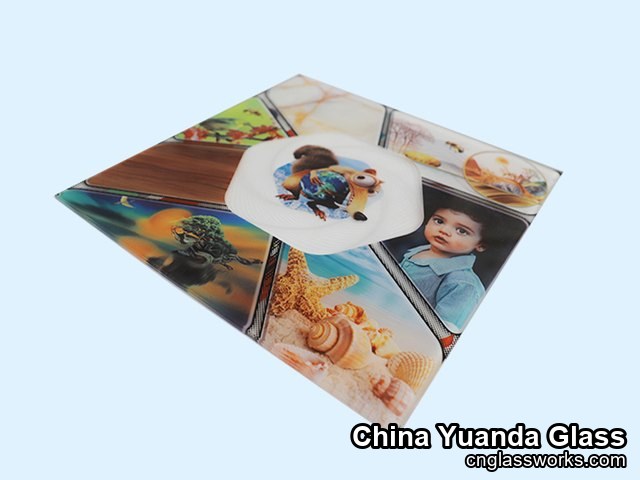 Fired, not glued
Specification
What printed glass can you produce?
These are the limits of our own lines, not a catalogue range. If your drawing sits outside one of them, tell us and we will say so before you spend time on a tender.
| Printing | Digital ceramic inkjet, single or multi-pass |
|---|---|
| Resolution | Up to 720 dpi |
| Maximum size | 3,300 × 9,000 mm |
| Thickness | 4 to 19 mm |
| Colours | Four-colour process plus white and custom spot colours |
| Finish | Fired into the glass at tempering temperature |
| Durability | UV stable, scratch resistant, suitable for exterior use |
| Build-ups | Monolithic, laminated, insulating, or as a frit on Low-E |
| File requirements | AI, PDF or TIFF at 1:1 scale, 300 dpi minimum |
| MOQ | From one crate; set-up cost applies to a first run |
Applications
Where is printed glass used?
Same product, different build-up. Send the application and the design load, and we will propose the configuration rather than quote the nearest standard panel.
Brand imagery and patterns on exterior glazing that must survive a decade of sun.
Photography and graphics in office and retail fit-outs.
Commissioned glass artwork where the image is fired, not applied as a film.
Printed frit gradients that control visibility and cut solar gain at the same time.
Packing
How is the printed face protected in transit?
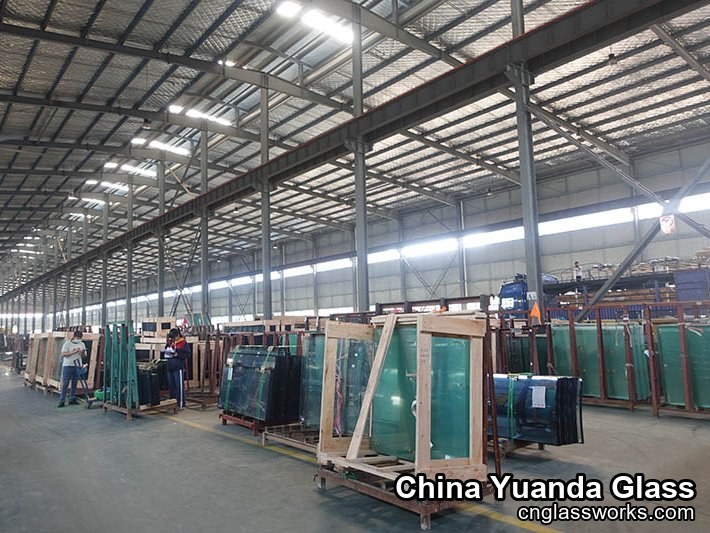
The printed face is wrapped and never stacked against another panel. Crates are marked with the print orientation so the installer does not mount the panel with the artwork facing the wrong way.
- Printed face wrapped in low-tack film
- Felt or foam interleaving between panels
- Orientation arrow marked on the crate
- Panel sequence listed on the packing list
- Sample print retained for future colour matching
Approvals
What standards and test reports come with it?
Certificates are issued in the manufacturer's name, and the test reports travel with the shipping documents so your consultant can review them before the glass arrives.
Questions
What buyers ask first
Will the print fade outdoors?
What file do you need?
How is this different from silk-screen printing?
Can printed glass be laminated or insulating?
Send the drawing,
we will send a price.
Tell us the build-up, the quantity and the destination port. You will get a specification review and an indicative price within one working day — reviewed by an engineer, not a bot.
Printed glass price Philippines: Price from USD ___ per sqm FOB Qinzhou. Printed area, number of colours and the set-up cost of a first run are quoted against your artwork.
How is it shipped to the Philippines?
Ceramic-printed glass is supplied to Philippine projects from our own plant in Qinzhou, China. Test reports for heat-strengthened and fully tempered flat glass are provided on request. The PS licence itself is held by the local manufacturer and the ICC is applied for by the importer. Shipments are quoted FOB Qinzhou or CIF Manila, Cebu or Davao, minimum one 20ft container, production 7-15 days after order confirmation. Port, duty and documentation details are on the Philippines market page; Manila and Cebu have their own pages.
Last updated: 2026-11-21. China Glass Factory, Qinzhou, China. Prices are indicative FOB Qinzhou and confirmed against your drawing.